What Adaptive Riders See; Practical Insights for Trail Planning
World Trails Conference 2026 | Break the Boundary Inc.
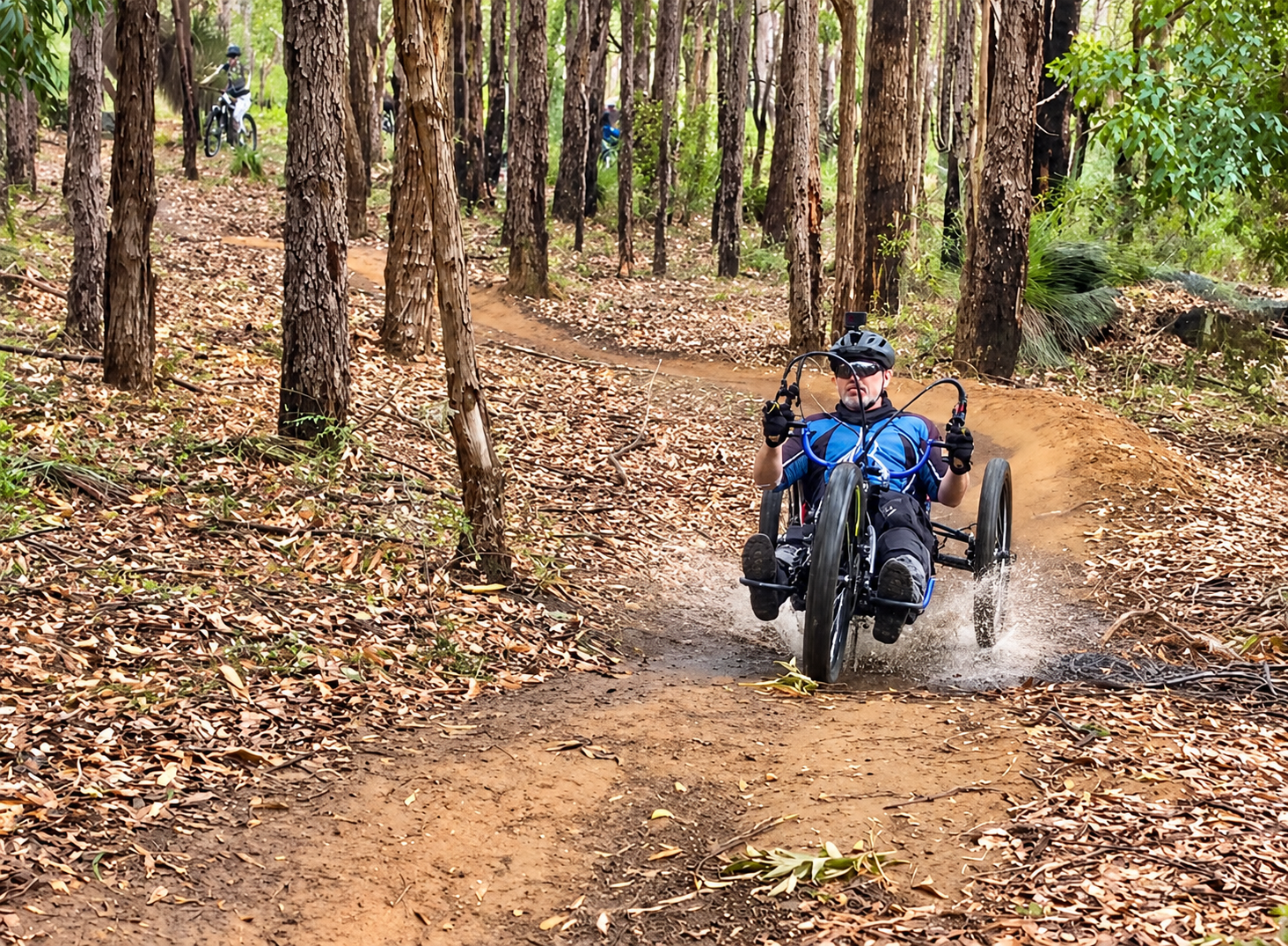
Seeing the trail from a different perspective
What makes a mountain bike trail accessible? And how does that experience change when you're riding an adaptive mountain bike?
At the 2026 World Trails Conference, Break the Boundary brought together lived experience, practical equipment knowledge and trail design considerations to explore how we can create more inclusive mountain biking opportunities.
Through the experiences of adaptive mountain bike rider Ebonny McGann, we explored the journey from preparing for a ride and arriving at the trailhead through to navigating technical trail features.
Using split-screen footage comparing two-wheel and three-wheel riding perspectives, we highlighted how line of sight, trail width, turning radii, obstacles and line choice can influence an adaptive rider's experience.
Our key message: Access = choice.
Not every trail needs to accommodate every rider or adaptive bike. But better trail design, meaningful consultation and accurate information can give riders greater choice, confidence and opportunities to participate.
Video 1
Before the trail: Access starts at the trailhead
An accessible trail is only part of the picture.
Follow Ebonny as we explore the practical considerations involved in preparing for a ride, including parking, unloading, transfers, accessible amenities and getting to the trail itself.
These details can determine whether someone can participate before they even reach the trailhead.
Video 2
On the trail: Two wheels versus three
See the same trail from two different riding perspectives.
Our split-screen footage highlights the differences between conventional mountain biking and adaptive mountain biking, including:
Line of sight and obstacle identification.
Trail width, clearances and turning requirements.
Three-wheel line choice.
Off-camber terrain and technical features.
Alternative lines (B-lines) and the importance of clear signage.
Australian Adaptive Mountain Biking Guidelines
Version 2.0 | Updated 2026
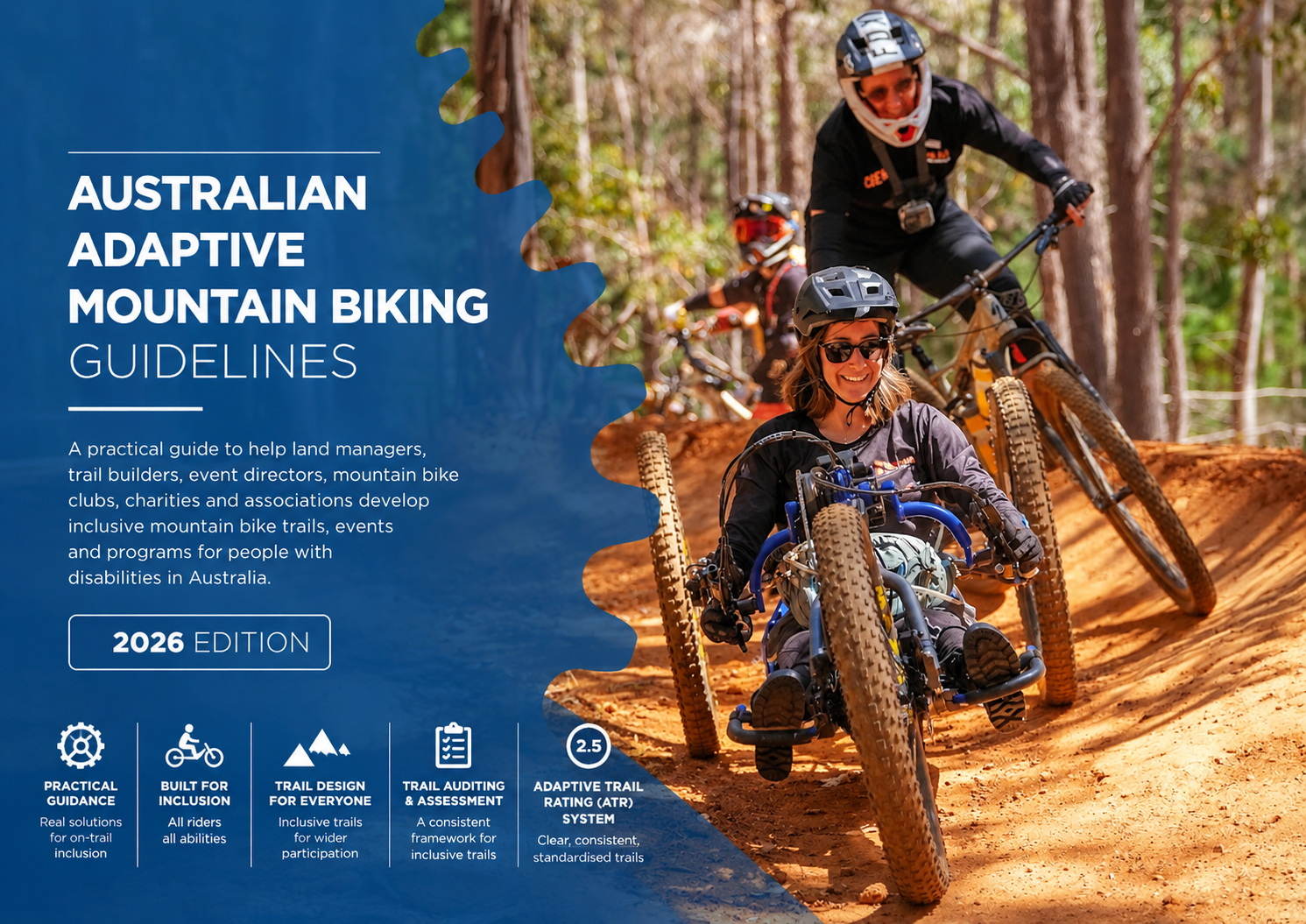
First published in 2018, the Australian Adaptive Mountain Biking Guidelines bring together technical trail design knowledge and the lived experience of adaptive mountain bikers.
The Guidelines provide a practical resource for trail planners, designers, builders, land managers, event organisers and recreation providers looking to improve accessibility and participation.
They cover:
Adaptive mountain bike types and rider considerations.
Trail accessibility and adaptive trail ratings.
Trail widths, gradients, camber and turning radii.
Obstacles, technical trail features and alternative lines.
Trail signage and wayfinding.
Parking, accessible amenities and trailhead facilities.
Inclusive event and recreation planning.
The Guidelines are intended to support informed decisions, better trail planning and more inclusive mountain biking experiences.
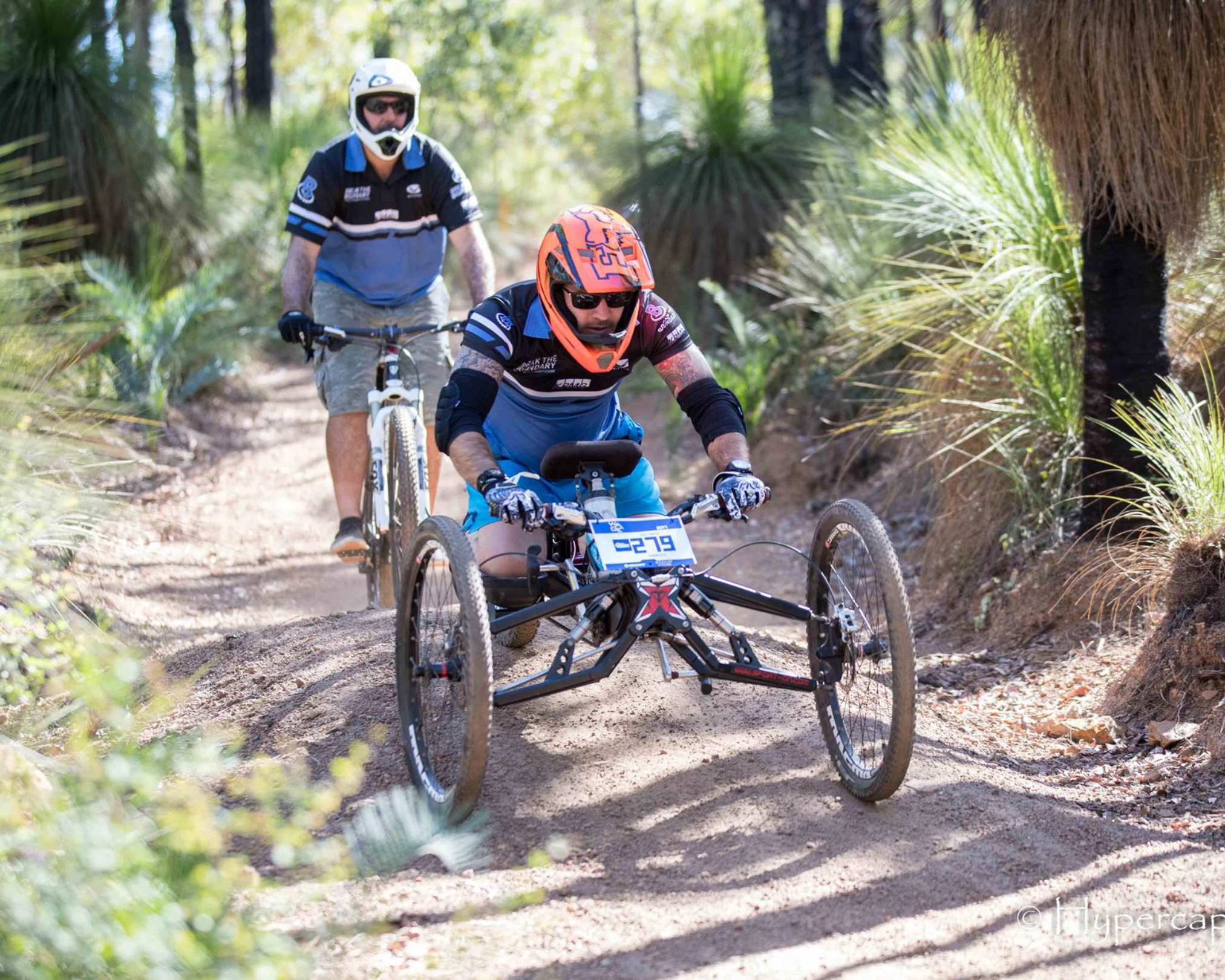
Adaptive trail auditing and accessibility advice
Are you planning a new trail, reviewing an existing network or looking to better understand how your trails accommodate adaptive mountain bikes?
Break the Boundary brings practical equipment knowledge and lived experience to conversations about trail accessibility.
We welcome enquiries from land managers, trail builders, designers and recreation organisations interested in exploring adaptive trail auditing, accessibility considerations or opportunities for collaboration.
Every trail and project is different. Contact us to discuss your location, objectives and the type of support you're looking for.
About Break the Boundary
Break the Boundary Inc. is a Western Australian, 100% volunteer-run charity helping people with physical and neurological disabilities get off flat surfaces and into the WA bush through adaptive mountain biking and adaptive hiking.
Based in the Perth Hills, we provide adaptive equipment, supported recreation opportunities, leader training and progressive skills development programs that help participants build confidence and independence.
Our work combines practical experience, volunteer expertise and the perspectives of people who use adaptive equipment.
We believe the best accessibility outcomes happen when lived experience is part of the conversation from the beginning.